
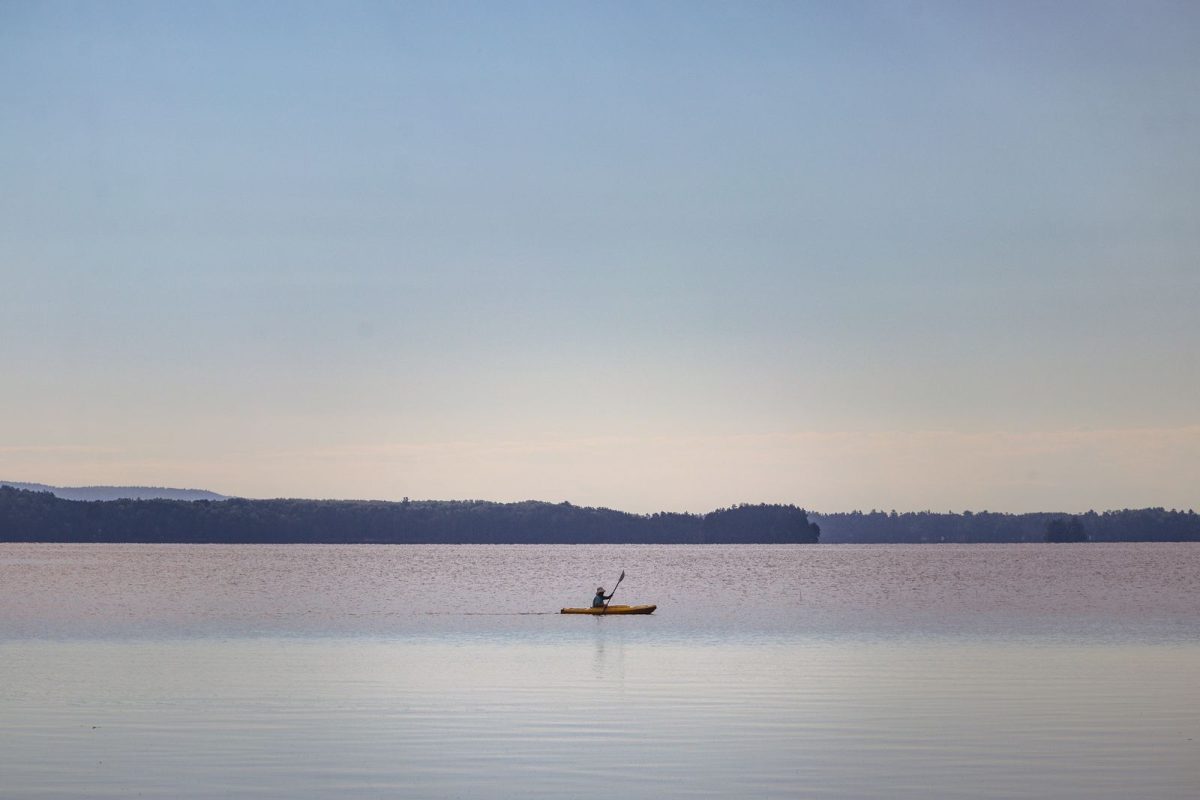
Among Levittown’s houses sleeps a system of lakes that gives the neighborhood its characteristic calm: Levittown Lakes’ and Lagos de Plata’s, two mirrors of water with a life of their own.
Not every neighborhood can say the water is a few minutes’ walk away. In Levittown, it can. The Levittown Lakes lake, to the north, and the waters of Lagos de Plata, among the development’s streets, are part of the daily landscape: they are seen from the street, enjoyed from the shore, and they order, without anyone announcing it, the neighborhood’s rhythm.
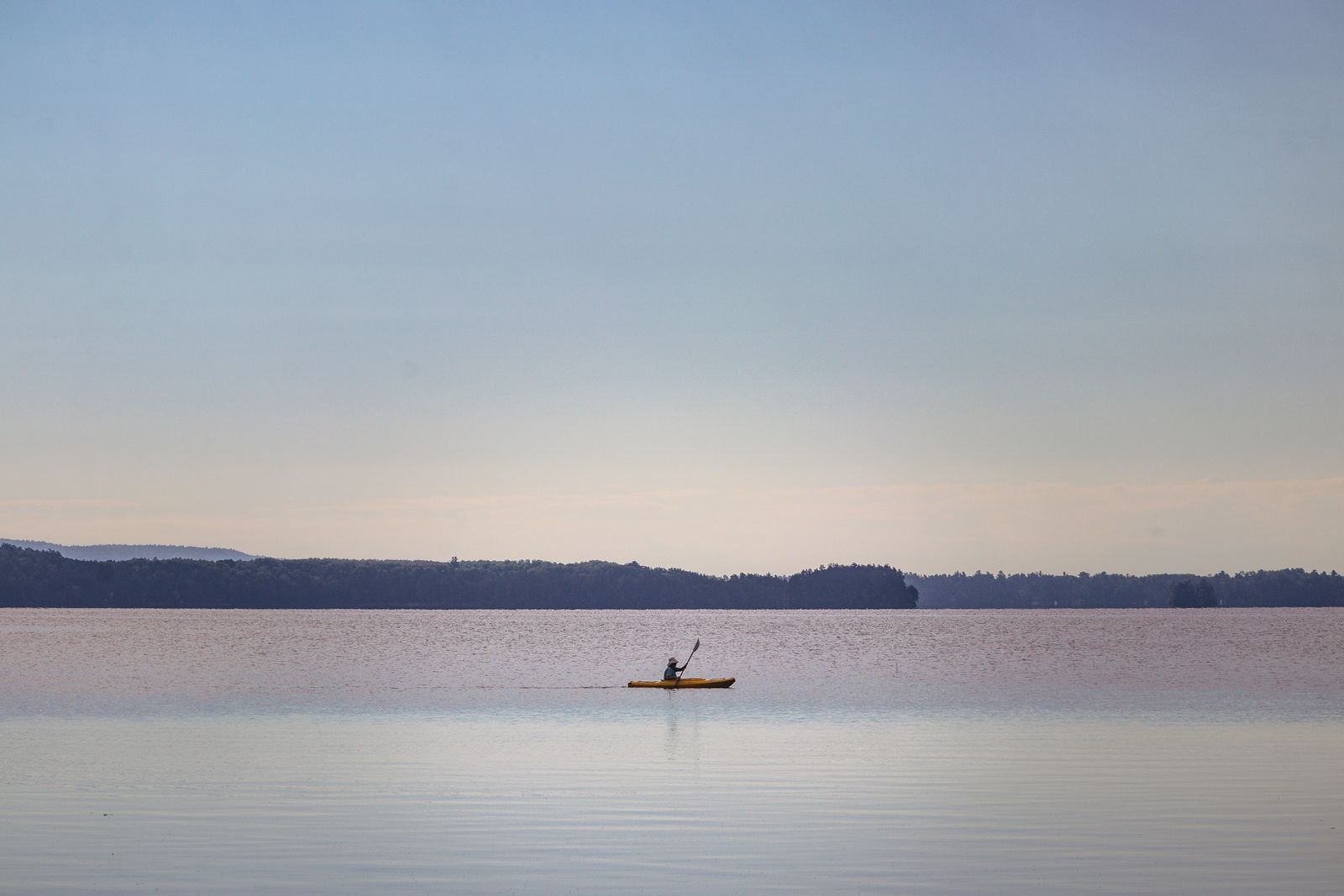
The lake is, first, a gym with no membership fee. Early risers who walk its shore, rowers who go out when the water is still glass, fishermen of infinite patience: each has their hour and their ritual. Unlike other exercise, the lake’s asks nothing in return — just show up — and gives back something money cannot buy: half an hour of a clear head.
It is also a nature observatory within anyone’s reach. The birds that frequent the lakes — herons, gallinules, ducks that come and go with the season — turn any walk into a small biology lesson. The neighborhood’s children grow up knowing nature is not a faraway place you travel to: it is a daily presence you greet from the sidewalk.
By mid-morning, the lake changes guard: in come those who walk with a cane and conversation, those who push baby strollers at a stroll’s pace, those who simply sit down. And at dusk the mirror lights up again, with the sky repeated in the water and the first lights of the houses. The lake thus works three full shifts without ever closing: it is the neighborhood’s most faithful employee.
The lakes also keep the sector’s climate memory. Their level rises and falls with the rains and tells the attentive neighbor how the season is coming. Whoever lives beside a lake learns to read the sky differently: with respect, with foresight, and with the humility of someone who knows the water always has the last word.
That coexistence brings clear responsibilities. The lake reflects, literally, the neighborhood’s care: clean shores, respect for responsible fishing, attention to what reaches its waters from the streets. When the neighborhood cares for its surroundings, the lake returns it as landscape; when it neglects them, it says that too. Few community thermometers are so honest.
There is also a small and beautiful economy around the lake: the one who sells coffee to the early risers, the one who rents or repairs kayaks, the one who teaches the neighborhood’s children to fish, as he was once taught. It does not move big figures, but it moves something better: shore trades that keep the bond between the water and the community alive.
And a warning the lake itself makes without words: what you see on the surface is only a part. Beneath the mirror there is a complete ecosystem that sustains the birds, the fish and, in the long run, the quality of life of the houses around it. Caring for the lake is also caring for what cannot be seen.
For Lagos de Plata, moreover, water is part of its name and its identity: a community that organized itself around its streets and its park, with the lake as its elder neighbor. And for Levittown Lakes, the lake is the sector’s very last name: nobody explains it, because everyone understands it on sight.
In a metropolitan area that runs in a hurry, Levittown’s lakes propose another speed. You do not have to go far or spend much to find it: just step up to the shore, look at the still water, and let it teach you. A neighborhood that has a lake has an advantage; a neighborhood that cares for it, moreover, has a treasure.

Comentar en Atelier 00949 requiere tu cuenta de Hey Levittown.
Entrar con Hey Levittown