
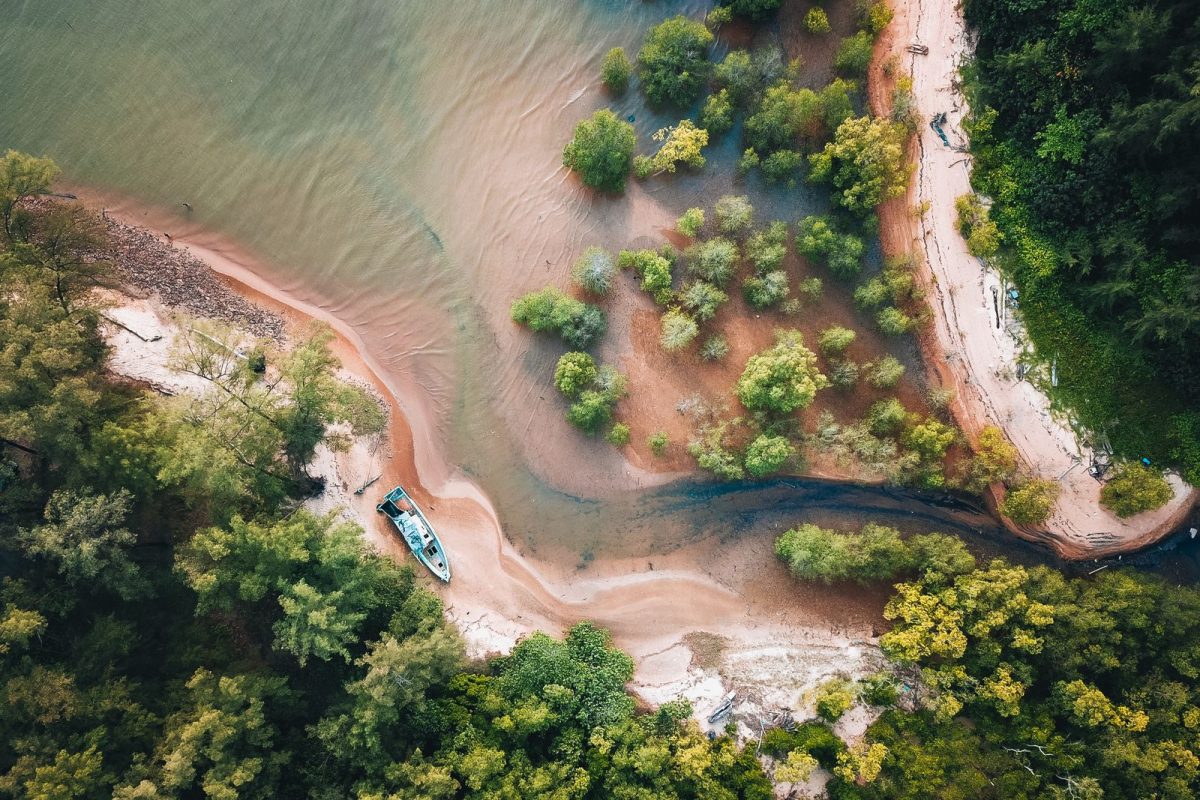
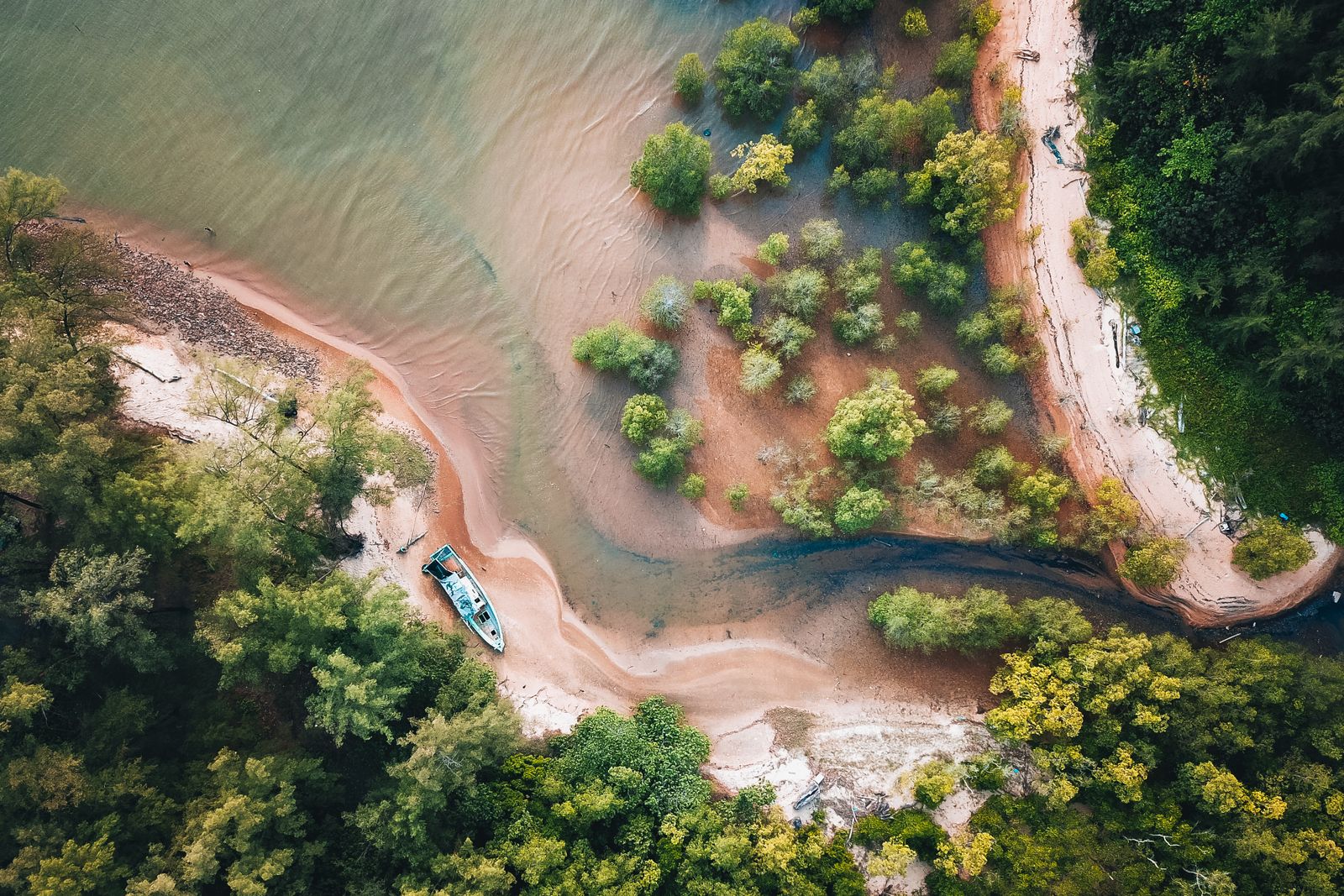
The Río de la Plata ends its journey on the Toa Baja coast, between Dorado and San Juan Bay. Its mouth is one of the most complete — and least told — landscapes in our town.
Every river tells two stories: the one of its birth and the one of its arrival. The Río de la Plata’s, the longest in Puerto Rico, begins in the central mountain range and ends here, on Toa Baja’s coastal plain, where its waters widen, quiet down, and give themselves to the Atlantic beside San Juan Bay.
The mouth is a world apart. Fresh water and salt water mix, the mangroves hold the shore firm, and the birds find a dining room open at all hours. For anyone who stops to look, it is hard to believe such a landscape sits so close to the developments and the highway: it is right here, at the end of familiar streets.
This final stretch of the river is also a page of history. The La Plata valley was farmland for centuries — cane marked Toa Baja’s economy and landscape for generations — and the river was its artery: it moved harvests, marked the roads, and decided, with its floods, the mood of the region. Much of what the flat town is today can be understood by looking at this valley.
The life the mouth sustains is discreet but constant. The mangroves work as a marine nursery: among their roots, fish and crustaceans grow that will later populate the bay, and their canopies order a population of birds that changes with the seasons. It is a reminder that “empty” landscapes are usually working in silence for everyone.
For the visitor, the mouth asks for another rhythm. It is not a place of hurry or noise: it is a place to watch currents, to follow with your eyes the low flight of a heron, to understand how fresh water says goodbye. Many discover it by chance, looking for the coast, and stay longer than they planned.
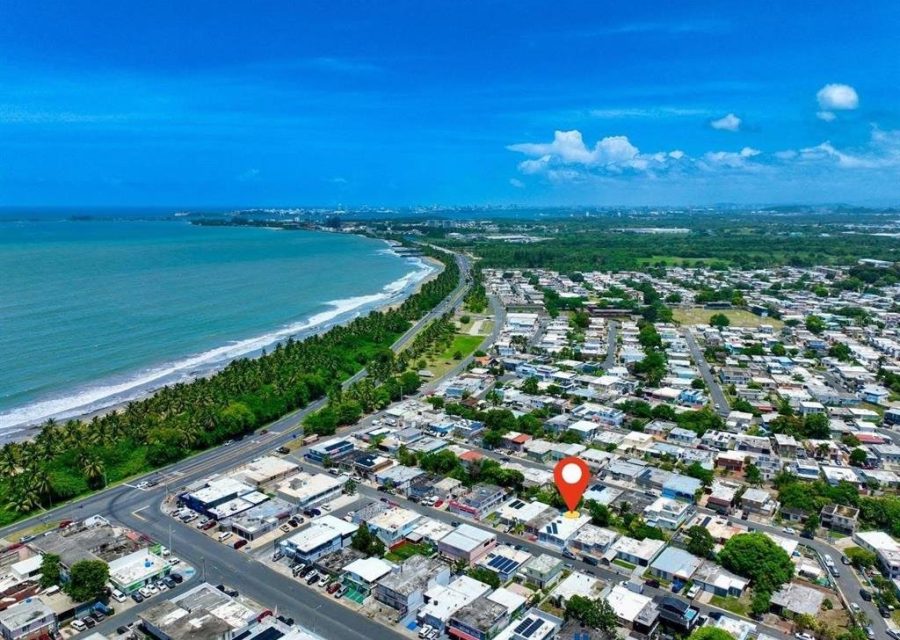
And it is, moreover, a living border between two Toa Bajas: the one of neighborhoods and developments, made of streets and routines, and the natural one, made of water, mangrove and sky. The fishermen who frequent the area know that double condition well: they leave the neighborhood with their cooler and return with the feeling of having been much farther away than they walked.
The place also holds a geography lesson no map teaches the same way: watching how the river opens, mixes and says goodbye explains the entire valley at a stroke — why the plain is so green, why the bay receives what it receives, why Toa Baja is exactly where it is. Area teachers have, a few minutes from the classroom, the best science laboratory in the region.
And it holds a promise for the town’s future. As more neighbors discover the mouth as a destination for walks, photography and education, so grows the possibility that Toa Baja will look at its natural wealth as what it is: a patrimony enjoyed by caring for it, and a calling card as valuable as its history.
Knowing the mouth changes your relationship with the whole river. Whoever has seen where the De la Plata ends understands that caring for it upstream — at any point of its course — is also caring for this arrival. The river and shore cleanup campaigns that neighbors periodically organize have their most visible reason right here.
The invitation of always remains: come closer, with respect and without leaving a trace, to where the river meets the sea. It is one of those places that make a town recognize itself — and that remind us that Toa Baja, between the valley and the bay, has always lived looking at the water.
Comentar en Atelier 00949 requiere tu cuenta de Hey Levittown.
Entrar con Hey Levittown